
The birth of a foal is a special moment for every Breeder. After nearly 11 months of gestation, you want to make sure you’re on time for the birth. But how do you recognize that labor is approaching in a mare – and when is the right time to use a foaling alarm?
In this article you can read the most important signals that a mare is about to give birth as well as when to put on Birth Alarm for peace of mind. Would you first like to know how a foaling alarm worksThen also read our article on how Birth Alarm works.
Why timing matters
Birth in a mare often proceeds quickly. When the contraction (expulsive) begins, the foal may be born within a short time. At that point, it is important that you are present to check that everything is going well and intervene if necessary.
Many Breeders find it difficult to determine when to check more intensively or use a foaling alarm. Starting too early sometimes feels unnecessary, but starting too late can mean missing the start of Birth.
Therefore, recognizing signals as well as timely deployment of Birth Alarm is the best combination.
7 signs that labor is approaching in a mare
Every mare is different, but these signals often occur in the last days to hours before foaling.
- Udder development
The udder visibly fills and feels firmer. This may occur gradually or only shortly before Birth. - Waxing drops (waxing)
Small white drops on the teats are a familiar sign that Birth is approaching, often within 24-48 hours – although this varies from mare to mare. - Slackening of pelvic ligaments
The muscles around the base of the tail become softer and appear to collapse. This is a classic sign that the body is preparing. - Behavior change
Mare may become more restless, isolated or affectionate. - Restlessness
More walking, turning, scraping or difficulty relaxing is common in the final stage. - Sweating without exertion
Light sweating may occur as Birth approaches. - Lying down and getting up more often
Lying down briefly and getting up again is an important signal, especially when this behavior changes from normal.
Important: not every mare shows all signals, and timing varies greatly from mare to mare. Signals give an indication, but never exactly predict Birth.
When do you convert Birth Alarm?
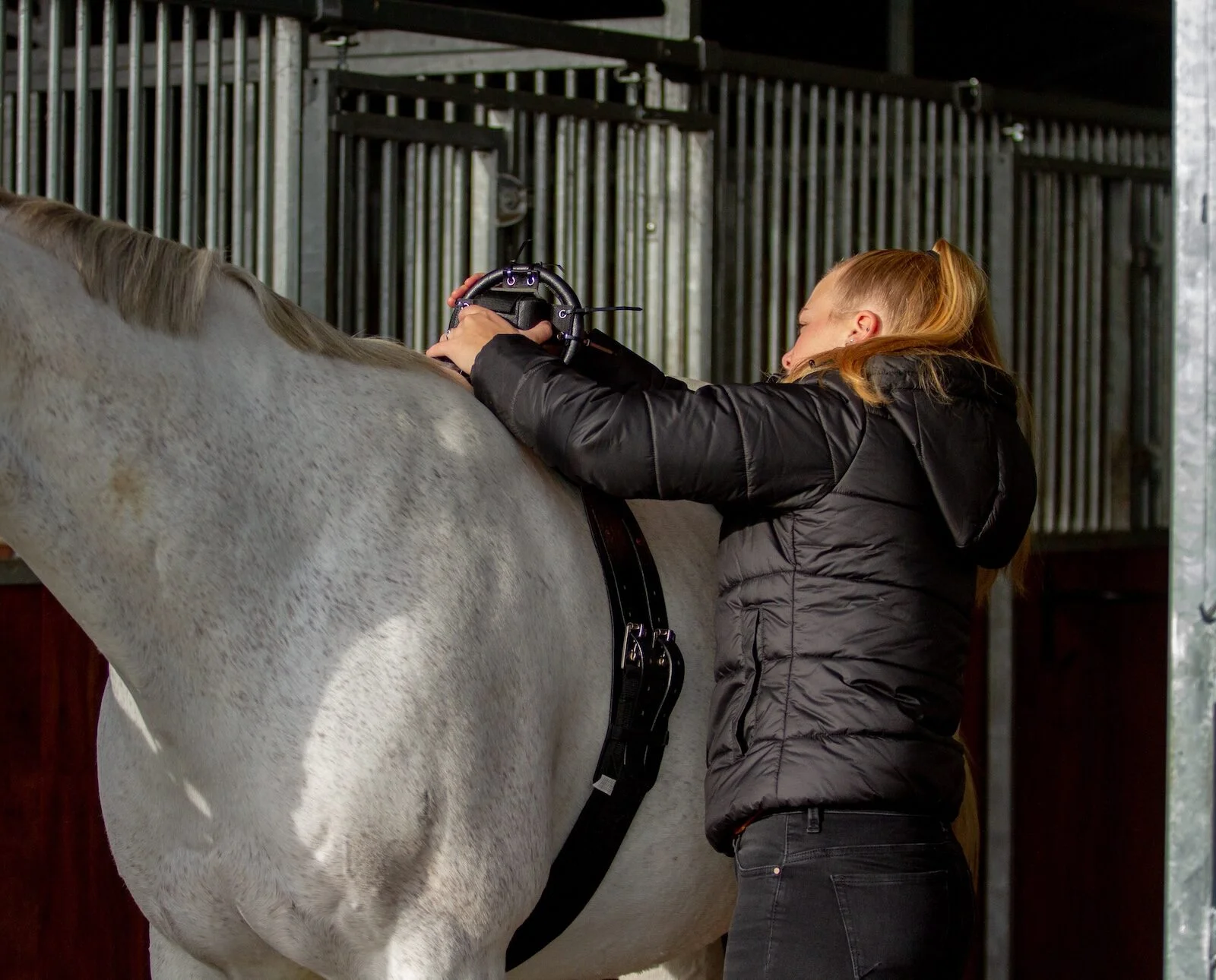
Birth Alarm should preferably be put on about two weeks before the due date. If you see earlier signs that labor is approaching, such as udder development or changes in behavior, you can put the foaling alarm on earlier. Birth Alarm is non-invasive and designed to be worn comfortably for long periods of time.
One of the most frequently asked questions is: when should I put Birth Alarm on?
General guideline
We recommend putting Birth Alarm on about two weeks before the due date. That way you are prepared during the period when labor may begin – even if it happens earlier than expected.
Let signals be leading
If you see obvious signs earlier, such as udder development, slackening of the pelvic ligaments or behavioral changes, feel free to put Birth Alarm on earlier.
Many Breeders choose to start a little earlier rather than too late, for extra peace of mind.
Is Birth Alarm comfortable for the mare?
Yes. Birth Alarm is designed to be worn comfortably for long periods of time.
- System is non-invasive
- It does not hinder the mare from moving, lying down or resting
- It is suitable for prolonged wearing in the final stage of gestation
Most importantly, Birth Alarm should be worn during the period when labor may start so that you are alerted in time. You can view all Birth Alarm models to see which solution fits best.
Summary: when to put on Birth Alarm
You can put on your Birth Alarm:
- about two weeks before the due date
- earlier when physical signs become apparent
- as soon as behavior changes
- When you notice that Birth is approaching
- when you want extra peace and peace of mind
If you are in doubt, the rule is usually: prefer to start a little earlier.
Birth Alarm helps you attend the birth on time – for Mare and Foal safety and your own peace of mind. Also read our Foaling season checklist to help you prepare properly.
Frequently Asked Questions
When should I put Birth Alarm on?
- We recommend about two weeks before the due date, or earlier when signs become apparent.
Can Birth Alarm be premature?
- No. Many Breeders choose to start a little earlier for extra Peace of mind.
Is Birth Alarm comfortable for the mare?
- Yes. Birth Alarm is non-invasive and designed for comfortable long-term wear without interfering with the mare.
Can you accurately predict birth in a mare?
- No. Signals give an indication, but timing varies from mare to mare and from birth to birth. That’s why many Breeders use a foaling alarm.
Want to be sure which Birth Alarm best suits your situation or mare?
Explore our product range or contact a Birth Alarm Resellers for personalized advice.