
The birth is behind us.
A special moment and also the beginning of a new, important phase.
👉 What should you do now?
👉 What should you pay attention to?
👉 And when should you intervene?
This article tells you exactly what to expect in the first days and weeks after the birth of a foal, so you can continue to act with confidence.
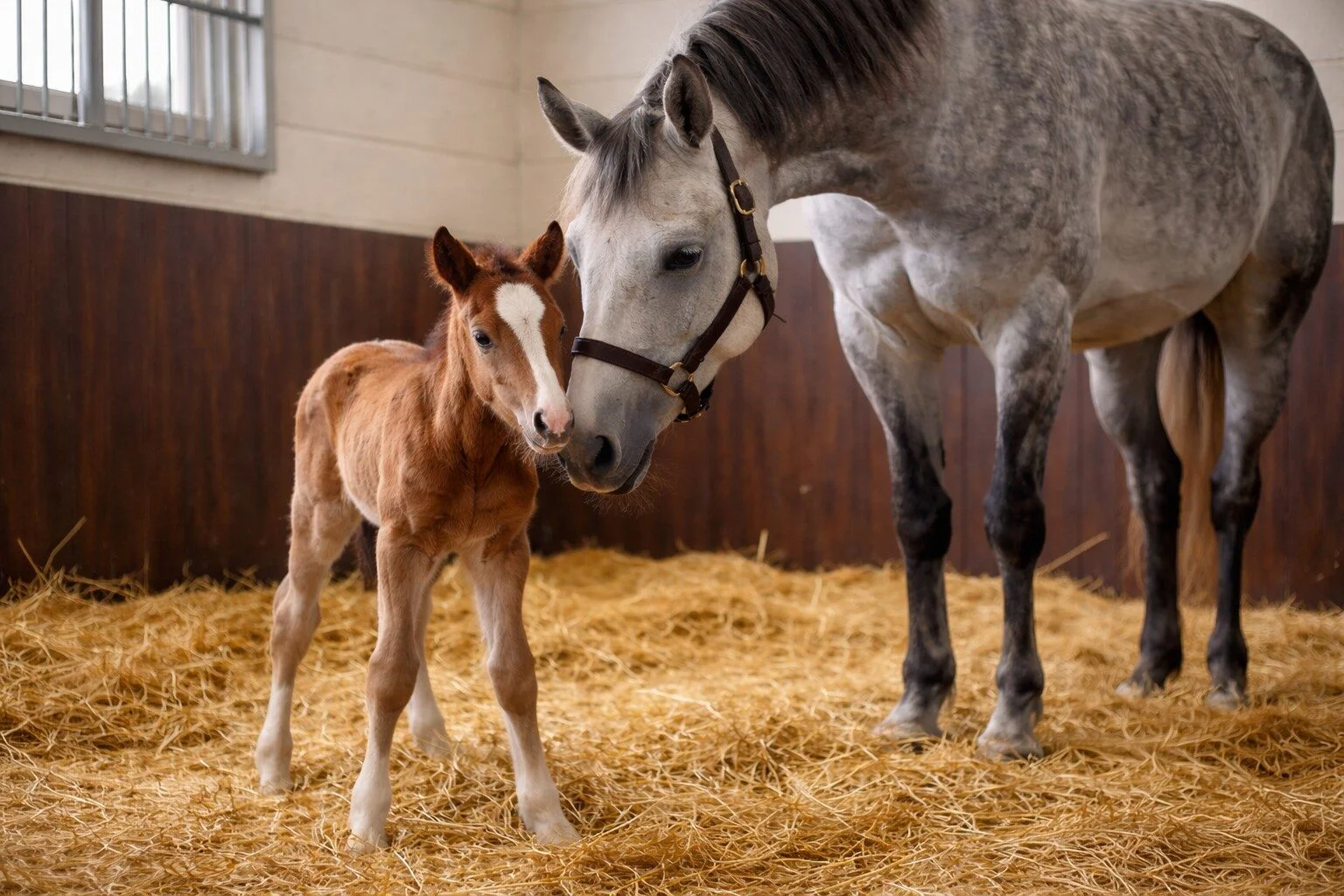
What do you need to know immediately after birth?
In the first hours after birth, these are the most important signs:
- foal is standing within 1 hour
- drinks colostrum within 2 hours
- afterbirth came off completely within 3 hours
- foal is alert and responsive
👉 This is the basis of a good start
Are you in doubt about any of these points?
👉 Always call your veterinarian
The first days after the birth of a foal: what do you pay attention to?
The first few days are crucial.
Pay active attention to this:
✔ Behavior of the foal
A healthy foal:
- Is active and curious
- seeks contact with mare
- regularly gets up and lies down again
👉 This is normal behavior
⚠️ Notice:
- sluggishness
- little response
- abnormal behaviour
👉 This is a signal to act immediately
✔ Drinking and colostrum intake
A foal drinks more often than many people expect:
👉 An average of 6 to 7 times per hour
This is essential for:
- energy
- resistance
- growth
In the first few hours, the foal drinks colostrum.
After that, it continues to drink regularly.
👉 This is normal
How do you check if your foal is drinking well and active?
💡 Our tip: use a camera as an extra check
In the first few days, you don’t want to miss anything – even at night.
With a barn camera, you can easily monitor:
- Whether the foal is drinking
- Whether it is regularly on
- Whether the behavior is normal
👉 So you can see what’s happening right away, without having to go to the stall every time
Note:
a camera is a tool – when in doubt always go and see for yourself
What should you do if a foal is not drinking?
This is one of the most important situations to recognize right away.
⚠️ Notice:
- the foal does not seek the udder
- hardly drinks at all or not at all
- Is sluggish or weak
👉 This is always an alarm signal
➡️ Contact your veterinarian immediately
Don’t wait – quick action is crucial.
✔ Temperature and health
Normal temperature:
👉 37,6 – 38,5 °C
Pay active attention to this:
- fever
- tardy behavior
- drink less
👉 These are important signals
✔ Manure (gut pulp)
In the first period, the foal belongs:
- excrete dark, firm manure (intestinal poop)
- then move on to lighter manure
👉 This is normal
⚠️ Notice:
- pressing without result
- unrest
👉 Please contact your veterinarian
✔ Navel: daily check
The navel is a sensitive point.
Check daily:
- swelling
- heat
- fluid or pus
💡 Practical tip:
Keep the navel clean and disinfect it 2-3 times a day with a mild disinfectant in the first few days.
👉 This is how to avoid problems
Common problems in a newborn foal
Foal diarrhea
Often occurs around day 5-10.
👉 In many cases normal
⚠️ Notice:
- sluggishness
- dehydration
- do not drink
👉 Then immediate action needed
Navel Problems
Notice:
- swelling
- sensitivity
- heat
👉 Always take it seriously
Infections and respiratory problems
Foals are vulnerable in the first period.
Notice:
- cough
- nasal discharge
- fever
👉 This calls for swift action
Glanders: risk within the barn
Glanders is a highly contagious infection that can spread quickly within a barn.
👉 Young horses in particular are more sensitive
Watch for symptoms such as:
- fever
- sluggishness
- nasal discharge
- swollen lymph nodes
At a later stage:
👉 abscesses may develop that break open
👉 This makes spreading extra easy
On suspicion:
- isolate the mare and foal
- contact your veterinarian immediately
🎓 Webinar tip: Droes Awareness Week
Want to know more about glanders and how to prevent it?
👉 On May 13, Anymal will host a free webinar
You will learn:
- how to recognize glanders
- how to prevent spread
- what to do in the event of an outbreak
👉 Practical and directly applicable
Sign up:
https://anymal.webinargeek.com/droes-awareness-week
The first weeks: development of the foal
✔ Movement and growth
In the first few weeks:
- the foal becomes stronger
- moves it more and more
- develops balance and coordination
👉 Movement is essential
✔ Behavior and contact
- strong bond with the mare
- learns social behavior
- reacts with increasing awareness
👉 Quiet contact with people helps
✔ Power supply and supplemental feeding
From about 4-6 weeks:
- you can start with foal feed
- and offer good roughage
👉 This supports healthy growth
When should you take immediate action?
👉 Always contact your veterinarian in case of:
- foal is not drinking or drinking inadequately
- sluggish or abnormal behavior
- fever
- persistent diarrhea
- swelling or inflammation
- health doubts
👉 Having doubts? Call anytime
Frequently asked questions about a newborn foal
How often does a newborn foal drink per day?
A foal drinks an average of 6 to 7 times per hour, spread throughout the day.
When should a foal first stand and drink?
Usually a foal stands within 1 hour and drinks within 2 hours of birth.
What should you do if a foal does not drink after birth?
Contact your veterinarian immediately – this is always an emergency situation.
What are signs that a foal is not healthy?
Drowsiness, not drinking, fever or abnormal behavior are important signs.
When should you call a veterinarian on a newborn foal?
When in doubt always – and immediately in case of abnormal behavior, fever or not drinking.
Peace starts with knowing what is normal
The first days and weeks after birth are intense.
But if you know what to look out for, you maintain control.
👉 You are on time
👉 You see what is happening
👉 You know when to act
Need help?
Do you have questions about your foal or Birth Alarm?
👉 Please contact your resellers or our support – we are happy to help you